Federal agencies are not retailers, but many of them still face business challenges that are fundamentally commercial in nature. Across the government, organizations manage transactions for permits, publications, training registrations, event access, surplus property, gift-shop merchandise, cafeteria services, and other fee-based offerings. These activities may not fit the traditional retail model, but they still require the same underlying capabilities:
- Intuitive ordering
- Accurate pricing
- Secure payment processing
- Responsive customer service
- Efficient fulfillment.
Too often, those functions are supported by disconnected systems and manual processes that were never designed to work together. An agency may have one tool for online payments, another for call center support, a separate process for in-person service, and limited visibility across the full transaction lifecycle.
The result is a fragmented experience for the public, added complexity for employees, and reduced insight for leadership. In an era when digital expectations continue to rise, this creates unnecessary friction in services that should be straightforward, transparent, and easy to access.
This is why commerce platforms deserve a more prominent place in the federal modernization conversation. While federal leaders often focus on enterprise resource planning, case management, cybersecurity, and data platforms, the transaction experience itself is equally important. Every time an agency charges a fee, enrolls a participant, distributes materials, or fulfills an order, it is operating a form of commerce. This is not to suggest that the government should operate like retail, but the question remains whether it can provide these services in a modern, integrated, and mission-focused way.
A Platform Built for Mission, Not Retail
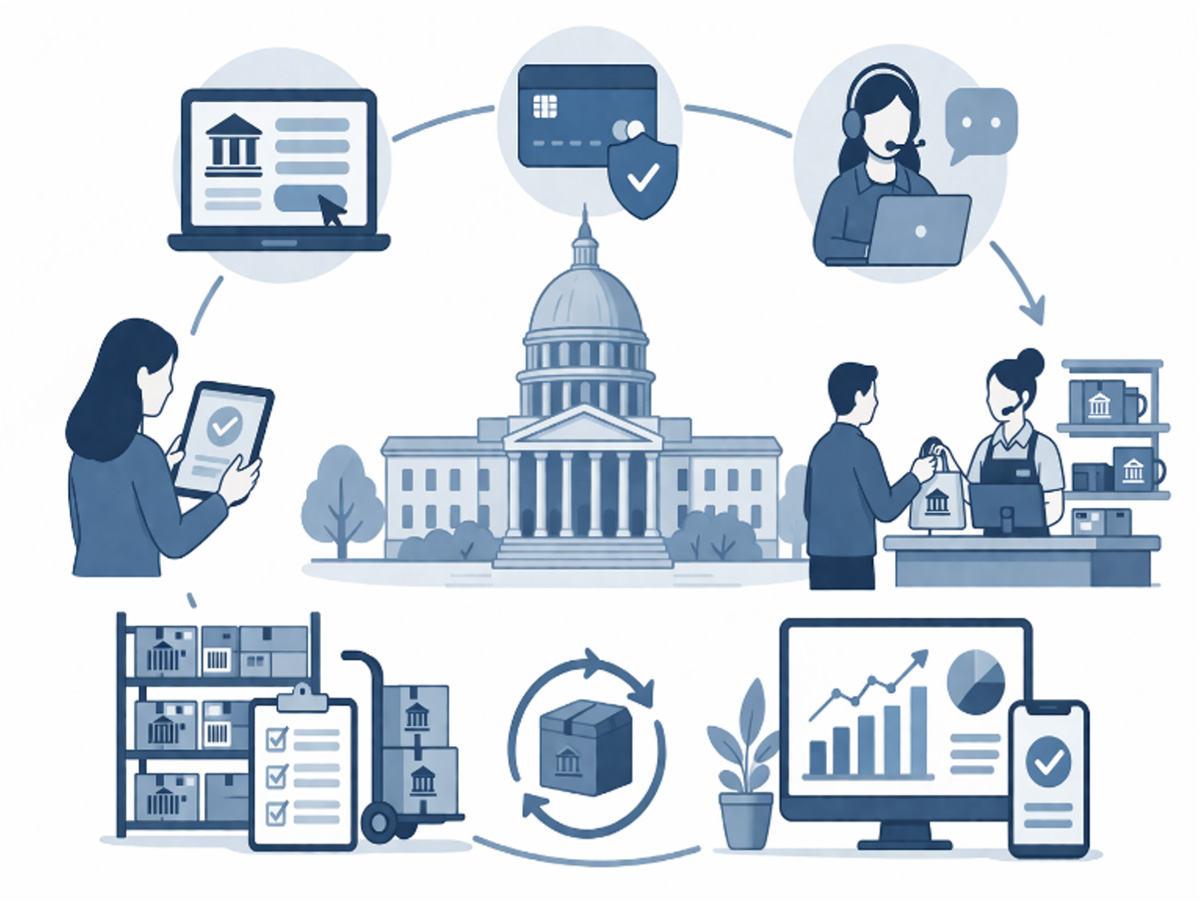
Microsoft Dynamics 365 Commerce offers a compelling answer. Its value for federal organizations is not in helping agencies become retailers, but in helping them modernize transaction-based services through a unified platform. By bringing together digital ordering, assisted service, and in-person fulfillment, Dynamics 365 Commerce enables agencies to support multiple service channels without forcing users or employees to navigate separate systems.
Consider what that continuity looks like in practice. A constituent begins a transaction online, calls for assistance, and completes the interaction at a field location – with every step connected. An employee has a complete view of an order, a payment, or an inventory item regardless of where the interaction started. That kind of end-to-end visibility is not a retail luxury. For agencies managing high volumes of fee-based services, it is an operational necessity.
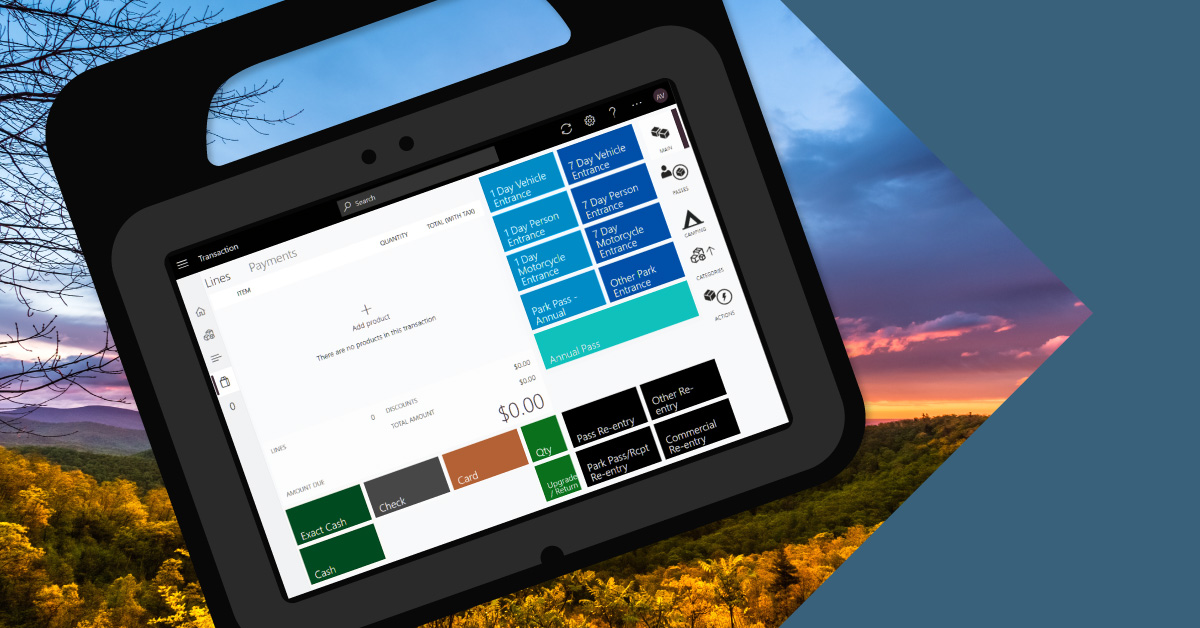
For example, consider the federal point of sale (POS) system developed by Arctic IT. The key benefits of the system include:
- Standardization: Unifies point-of-sale (POS) processes across multi-site locations.
- Portability: Supports mobile and offline-capable tablets.
- Efficiency: Reduces reporting delays from 30 days to less than 24 hours with the help of Power BI.
- Security: Meets federal compliance and enables secure, identity-managed access.
- Customer Experience: Supports contactless payments and reduces wait times.
The Real Cost of Fragmented Transactions
For agency CIOs and program leaders navigating IT modernization mandates, the cost of fragmented transaction systems is more than an inconvenience. Duplicate data entry, inconsistent records, and siloed reporting erode accuracy, slow fulfillment, and limit leadership's ability to make informed decisions.
A modern commerce platform addresses these gaps directly by standardizing processes across service channels, improving data quality, and providing leadership with more accurate reporting and stronger control over service delivery.
The range of federal use cases where this matters is broad:
- Passes, admissions, and educational materials for public-facing organizations
- Course registration and fee collection for training offices
- Gift shop and ticketing operations for visitor centers and cultural programs
- Cafeteria and convenience sales for internal services groups
- Surplus property and fee-based program offerings for program offices
Each mission is distinct. The underlying business requirement is the same: a reliable transaction experience backed by connected operations.
Federal agencies do not need consumer-style retail for its own sake. They need a point-of-sale platform solution that supports accessibility, accountability, efficiency, and service excellence.
Commerce technology, when deployed thoughtfully, can help agencies close the gap between mission delivery and user expectation – transforming transactional touchpoints from isolated administrative tasks into integrated service experiences that reflect the broader goals of digital modernization.
Let's Talk About Your Agency's Needs
For government leaders, the opportunity is to recognize that commerce is more than a retail concept. It is an operational capability that, when modernized, can improve public service, strengthen internal efficiency, and provide a more resilient foundation for the future.
Arctic IT Government Solutions understands this distinction. By combining deep public sector experience with Microsoft platform expertise, we help federal organizations evaluate where Dynamics 365 Commerce can support mission needs, streamline transaction-based services, and deliver a more modern experience for agencies and the people they serve.
Ready to explore what a modern commerce platform could look like for your agency? Contact Arctic IT Government Solutions today.

By Steve Schmitz, President and General Manager of Arctic IT Government Solutions